


Push Back Pallet Racking
Guangzhou JustBest Logistics Equipment Co., Ltd.: Your Professional Push Back Pallet Racking Manufacturer!
Founded in 2015, Guangzhou JustBest Logistics Equipment Co., Ltd. is mainly engaged in R&D, design, manufacturing, installation and after-sales service of warehousing equipment. The company's main products include pallet racking, flow racking, mobile rack, selective pallet racking, shuttle pallet racking, push back pallet racking, etc.


why choose us
High-quality products
The shelves are all made of high-quality cold-rolled steel and are strictly quality inspected before leaving the factory, ensuring excellent quality.
Rich experience
In the past twenty years, we provide shelf storage services to companies from all walks of life, work closely with them.
Professional team
Our shelf installation service team all over the world can effectively and quickly solve your storage problems.
One-stop solution
We are committed to providing you with one-stop storage solutions from design, production, transportation, installation to after-sales.
Benefits of Push Back Pallet Racking
High storage density
Push back racks maximize storage space by utilizing both depth and height, accommodating more pallets than traditional systems.
Increased selectivity
Despite their high density, push back racks offer better selectivity compared to drive-in racks. This means easier access to a variety of SKUs.


Time and labor savings
The Last In, First Out system simplifies inventory management and order picking, reducing the time and labor required for these tasks.
Versatility
Push back racks are adaptable to various pallet sizes and weights, providing flexibility for different products.
Product Parameters
|
Shelf Types |
Pallet Racking |
|
|
Size Specification |
Length |
2400/2500/2700/3000/3300/3600/3900mm |
|
Width |
900/1000/1100/1200mm |
|
|
Height |
2000~10000mm(Can Be Customized) |
|
|
Thickness |
Column: 1.5mm,2.0mm |
|
|
Layer |
2-6 adjustable layers (can Be customized) |
|
|
Material |
Shelf Material |
Cold rolled steel sheet,stainless steel |
|
Surface |
Electrostatic environmental protection spraying |
|
|
Loading Capacity(KG) |
1000-5000 kg (2204-11023lbs) per layer |
|
|
Color |
Column blue, beam orange, other colors can be customized |
|
|
Accessories |
Arms, columns, beams, connectors, etc. |
|
|
Structure |
Fixed, detachable, cantilevered |
|
|
Installation |
Floor mounted, suspended, wall mounted |
|
|
Feature |
Anti-tipping, anti-slip, fire and corrosion resistant |
|
|
Usage Environment |
Indoor, Outdoor, Ambient, Cold |
|
|
Applicable Scenes |
Warehouse, supermarket, factory |
|
|
Guarantee Period |
One Year Warranty |
|
|
Can you customize |
Support non-standard customization |
|
Application of Push Back Pallet Racking
Food and beverage storage
Push back pallet racking systems are very much appropriate for warehousing and distributing food and drink because of their first-in, first-out storing principle. In this case, perishable commodities such as dairy products, meat, and poultry can be stored far inside the racks, and older stock is used up completely before newer stock gets put in. Apart from this, beverages such as soft drinks and beer are commonly distributed in large quantities and require high-density storage, both of which are features that push back pallet racks can offer.
Manufacturing facilities
There are many materials and components to use in a manufacturing plant, be it raw materials, parts, or finished goods. Push-back pallet rack design helps organisations store many inventories of these material types. For example, in an automotive parts plant, the parts may need to be stored on pallets and pushed back for retrieval. This system increases the efficiency of space use in the warehouse and minimises the time spent on selecting materials.
Distribution centres
Inventory turnover is, in fact, very high in a lot of distribution centres, hence the need to implement a storage system that is efficient. Push-back pallet racking systems improve the storage and retrieval processes of the DKs, especially where there are large quantities of a few items to store. Companies that distribute electronics use push-back pallet racks to store televisions, computers, and other electronic equipment, taking care of the items properly until they reach the market.
Retail warehouses
Most retail businesses operate on a high volume of specific products, such as clothing, electronics, and household items. Push-back pallet racking systems allow these products to be stored and retrieved quickly and efficiently. In case of larger items like furniture or appliances, they can be stored in warehouse spaces under push back pallet racks, given that they have considerable height and are somewhat heavy.
Logistics and transportation
Transportation and logistics companies deal with large quantities of various goods that require storage before distribution. Push-back pallet racking systems maximise storage density and improve the speed and accuracy of picking pallets for shipment. In those companies where they deal with items that require a varying degree of weights and sizes, the versatility of push-back racking can be exploited in many ways.
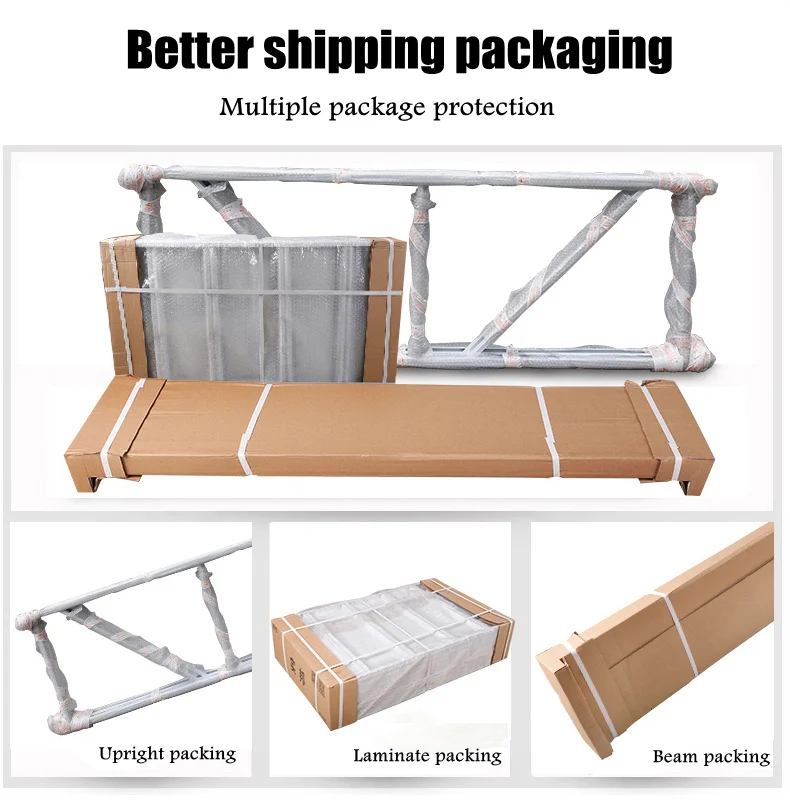
Packaging, Shipping and Services


Certifications


FAQ
As one of the most professional push back pallet racking suppliers in China, we're featured by quality products and low price. Please rest assured to wholesale discount push back pallet racking in stock here from our factory. Contact us for customized service.
push back pallet racking, push back storage, roll back racking