


Flow Racking
Why Choose Us?
Rich Experience
Founded in 2015, Guangzhou JustBest Logistics Equipment Co., Ltd. is mainly engaged in R&D, design, manufacturing, installation and after-sales service of warehousing equipment.
Professional Technical Team
We have 20 years of experienced engineering team: more than 20 engineers-level professional service teams around the world, and many experts from the company's research institutes and design institutes as backup forces for after-sales service.
Wide Product Range
Our products include industrial products such as storage shelves, logistics trolleys, aerial vehicles, pallets, storage cages, material racks, smart racks, tool cabinets (trucks), tool cabinets (trucks), storage cabinets, roller devices, etc.
Excellent Customer Service
Whether in the quality assurance period, or more than the quality assurance period, the supply side in the receipt of the user to report within 48 hours of the notice of repair, the supply side of the maintenance of technical personnel to arrive at the scene for testing and repair, such as can not be immediately repaired, then immediately make a maintenance plan.
What is Flow Racking?
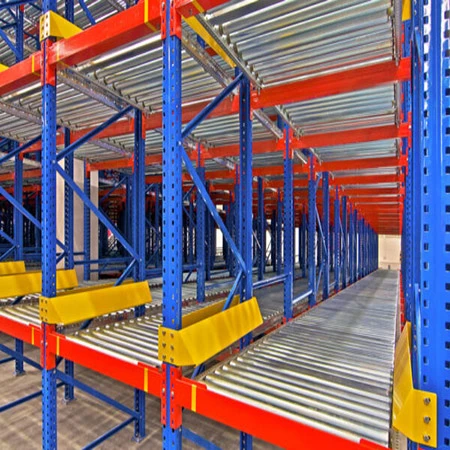
A flow racking is a special racking system where products or materials are placed on inclined roller conveyors and stored in a cost-effective manner. Due to the incline and gravity, products move from the back to the front, so older products must be removed first. This principle of "first in, first out" is called the FIFO principle. Flow racking allows for dynamic storage, easy removal of products, and time-saving order picking. This type of racking is used in warehouses, logistics centers, production facilities and other places to store products or materials and enable efficient material flow.


Advantages of Flow Racking
Improve productivity
The most evident advantage of using this type of storage system is that it improves the productivity of employees working at a warehouse. Those responsible for managing storage systems would save less time on having to remove and subsequently load products onto the rack. Warehouses would significantly increase their level of productivity because the time it takes to perform this task has been lessened. The employees can focus on the more crucial aspects of warehouse management — whether it be inventory inspection, handling of fragile goods, or signing off on parcels that need to be delivered upon deployment.
Optimize storage space
Not all warehouses are built the same — some need to allocate a large area to accommodate equipment such as forklifts, packing tables, utility carts, and the like. With this in mind, storage space needs to be optimized to achieve better warehouse operations. Using pallet flow racks can greatly assist in maximizing the space of any given warehouse. There would be a reduction in the number of aisles that are needed for storing loads with varying dimensions. Unlike in typical racking systems, warehouse employees would be more equipped to keep track of multiple storage loads all at once, with minimal effort.
Non-time-consuming
In line with improving the overall productivity of warehousing functions, pallet flow racks also present less time-consuming options for employees. One main driver behind this because there is less need to simply navigating the warehouse for storage and unloading. Apart from this, employees also wouldn’t have to devote much time on simply operating multiple forklifts at once, thereby greatly reducing the time spent on maneuvering and turning on the engines.
Good for high-density warehouses
Pallet flow racking is best for utilization in high-density warehouses that receive a bulk of parcels daily. Multiple cartons containing heavy loads will be easier managed through the FIFO mechanism, as mentioned before. In parts of the warehouse where heavy foot traffic is present, there needs to be an efficient method in the transport and transfer of cumbersome loads from one point to another. Pallet flow racking can greatly help in this situation because there’s only a single channel by which items are stored and subsequently unloaded from the racks.
Reduce damaged goods
Damaging in parcels can occur at almost every level of the supply chain and this is especially true for activities that take place in the warehouse. Through better stock organization, warehouses can limit instances wherein products are damaged, or even potentially eliminate other types of unfavorable situations. In the traditional pallet racking process, employees would still have to manually rearrange the units under a given set of conditions. It’s possible that stocks will bump against one another and tumble onto the ground during the process.
High customization
Warehouse managers would also be able to customize the different components of a flow racking system to their benefit. In this way, the essence of what makes pallet flow racking a desirable option for large-scale warehouses is still retained — yet can they incorporate additional elements to tailor fit the system to their needs. Flow racking systems are characterized as having a high-scalability. The storage capacity can be greatly increased to accommodate loads of different sizing. Aside from this, it’s also possible to make modifications to the height on the rack to allow the storage of different types of items.

Carton Flow Racks: Designed for boxes, cartons, or other package types, these racks are perfect for order picking and assembly lines, offering high visibility and accessibility.
Pallet Flow Racks: These are used for heavier loads stored on pallets. Equipped with robust rollers, pallet flow racks can handle the weight of palletized goods, making them suitable for bulk storage.
Span-Track Flow Racks: This versatile option can be added to existing shelving or rack systems to convert them into flow racks, enhancing their functionality without the need for a complete overhaul.
Application of Flow Racking
Manufacturing
Flow racks streamline assembly lines by providing easy access to components. They also support just-in-time manufacturing to reduce inventory overhead and enable lean inventory management.
Fulfillment Centers
Flow rack systems enhance order picking efficiency and accuracy, which is crucial for eCommerce businesses dealing with high volumes of diverse stock keeping units (SKUs). Flow racks are scalable, helping businesses keep up with seasonal demand and growth.
Third-Party Logistics (3PL) Warehouses
3PLs utilize flow racks to organize inventory, increase space utilization, and maximize pick efficiency for multiple clients within the same space, improving turnaround times and reducing pick errors.
Grocery Stores
Retail businesses such as supermarkets can employ flow racks in backroom storage to manage inventory turnover and maintain fresh stock on the sales floor, which is essential for perishable items.
Automotive Shops
These businesses leverage flow rack systems to organize parts and tools for quick retrieval, enhancing service speed and repair efficiency.
Restaurants
Even restaurants can benefit from a dynamic storage solution. Flow racks can be implemented in kitchen setups to streamline food preparation processes and in order pickup areas to maximize storage space and promote better organization.
Components of Flow Racking


Baseplates
An upright frame has at least two baseplates used to stabilize and anchor the pallet rack to the floor. The size of the baseplate is based on seismic forces and the loads placed on the pallet rack.
Shims
Shims are used to level the rack into plumb tolerance on warehouse concrete floors and should match the size of the upright baseplate.
Beams
Two pallet rack beams with a connector on either end are required to form a shelf.
Crossbars
Crossbars help support pallets between the beams. Typically, two crossbars are used beneath each pallet load.
Wire Decking
For a more solid support of pallets, wire mesh decking is used to prevent pallets or the products from falling through the rack structure.
Wood Stickers
Wood decking (stickers) such as a 2” × 4” or 2” × 6” can be used for product support.
Row Spacers
Row spacers are used for back-to-back rows to provide a flue space and give the pallet racks additional strength and stability.
Column Protectors
Post Protectors and Straddle Protectors are bolt-on accessories that help shield the upright to minimize damage from forklift impact. See durability add-on accessories.
End-of-Aisle Guard
End-of-Aisle Guards are either bolted to the racking or anchored to the floor to help prevent damage at the end of the aisle.
Anchor Bolts
Pallet racking must be anchored to the floor. The size, type, and amount of embedment of the bolt is determined by local building codes or seismic engineered design.

Flow racks are wheel-based conveyor systems that use the power of gravity to make essential manufacturing and warehousing tasks quicker, easier, and cheaper than static systems allow.
Flow racks trade in hard-to-reach shelving for conveniently angled and accessible racks, allowing parts and products to flow smoothly toward your pick points. This constant carton replenishment automatically reduces travel time and boosts pick speeds, enhancing the efficiency of your operators without increasing their workload.
Whether you need to streamline carton flow, improve operator efficiency, or ensure first-in, first-out (FIFO) stock rotation, flow racks' space, time, and resource-saving nature make them an ideal fit for any facility.
Create Better Material Flow With Effective Flow Racking Design
Start with a thorough understanding of the process
We cannot stress this enough. Don’t just know how the process works on paper. Go to the floor and observe the process. Understand the operator’s environment, their tasks, the parts and packaging arriving to them, how product arrives, and the signals (or lack thereof) to create product movement. Talk with the operator to improve your awareness of how the current flow works for them – what would they like to change?
Know your constraints, timeline, and ambition
If you had unlimited space, time, and money, what could you accomplish? Probably nothing. That sounds counterintuitive, but it’s true. Constraints in space and time plus ambition focuses your efforts and helps to set correct expectations. Putting a solution in place to present two new parts tomorrow and creating connected flow with new packaging, carts, and a rack to show how a system could work next month is quite different.
Design for visual management
Visual management is not just about production output and zoning. Visual management is a way of thinking that will change how you design every part of your process. Visual management principles can be built into everything to connect the equipment with the process. It will support the equipment and process working together instead of against each other. How could the flow rack help signal a supervisor that something is wrong? How could the flow rack help the material handler know which parts go in which lane? Better thinking combined with better doing creates better solutions.
Types of Tracks in Pallet Flow Racking
In the realm of pallet flow racks, individual skate wheels play a pivotal role in shaping the system’s functionality. In this track configuration, these wheels are strategically positioned to provide support to the strongest part of the pallets. This deliberate arrangement ensures a balanced and controlled flow as pallets traverse along the track. The precision and stability inherent in individual skate wheel tracks make them particularly well-suited for scenarios where pallets of uniform size and weight are common. This focused support contributes to a seamless movement, emphasizing the system’s efficiency in handling standardized pallet loads.
An alternative configuration for pallet flow racks involves the use of full-width steel rollers as tracks. In this setup, these rollers are strategically positioned to support the entire width of the pallet. This design choice offers a broader surface for pallet movement, enhancing the adaptability of the system to various pallet types and sizes. While full-width steel rollers may not necessarily boast higher capacity compared to other configurations, their distinct advantage lies in increased versatility. This makes them a preferred choice for warehouses dealing with diverse inventory, where the ability to accommodate different pallet specifications becomes a crucial aspect of operational efficiency.
This isn’t a storage system that stands out for its height, although it is possible to combine it with stacker cranes for pallets. To operate with these kinds of racks, manual handling equipment is normally used, limiting the height. On the other hand, it should be noted that, due to the inclination of this system, the pallet flow racks are taller than traditional high-density systems. What’s more, the higher their levels, the greater the loss of storage space (which could even amount to an additional level).

What to Look For When Purchasing Flow Racking
Customization
There is no one-size-fits-all solution in manufacturing because your processes are unique to your organization—even if you’re making something that someone else is making. So don’t let someone sell you a generic flow rack that’s not customized to your process and the materials it will be flowing. A good flow rack can accommodate your specific materials to support what your process needs, whether it is over-the-line delivery or unpackaged part presentation to operators.
Flexibility
Production needs change constantly – volume, line balancing, product mix. Your flow racks should be able to accommodate those changes quickly, whether that means reduced width, additional lanes, or different materials to flow. Look for flow racks with construction that allows for change, such as tube and joint construction, which you can easily right size with a few simple tools.
Reusable Components
The most effective continuous improvement is done quickly by the people doing the work. If you want this continuous improvement to happen and see results, your plant equipment needs to be flexible with reusable components. When a rack is no longer needed, it should either be changed and repurposed or disassembled into parts to be used in another design without having to buy something new. Here’s another instance where tube and joint construction is a good option; tubes and joints can be disassembled and reused in new applications very easily, and kept as inventory for when the need arises.
Ergonomics
Operator ergonomics is a crucial part of employee safety, as repetitive use injuries are common in manufacturing, as well as cross training. One-size-fits-all flow racks often fit nobody well and hamper cross training efforts because operators are naturally different sizes. Keeping all product in the ergonomic golden zone makes everything easy to reach for all people.
Serviceability
Fixtures and equipment can take a beating on the production floor and suffer from the wear and tear of daily use. Some companies still weld their flow rack structures, which can seem cheap on the front end, but any damage requires substantial rework and they are not flexible when changes are needed. Make sure that you purchase flow racks that won’t become obsolete or unserviceable. You can do this by ensuring that there are easily obtainable replacement parts and that the company you purchase the racks from can provide service, should you ever need it.
5 Common Flow Racking Implementation Mistakes that Impede Performance
Choosing the Wrong Style Track
When it comes to flow rack options, there are typically two styles of track to choose from: dedicated lane and universal bed. While they are both track styles that are commonly used in flow rack systems, they have different features that make them ideal for certain applications. For example, dedicated lane tracks utilize carton flow rollers and are great for predictable box sizes such as storing shoes, liquor, or apparel. On the other hand, universal bed carton flow tracks are ideal for unpredictable box sizes, offering great flexibility.

Choosing the Wrong Track Width
Choosing the wrong track width can result in several efficiency-killing consequences. Firstly, it prohibits workers from placing SKUs in the optimum location. In addition to putting a wrinkle in productivity, incorrect track width wastes space when the SKU is undersized compared to the track it’s in. Most businesses can operate efficiently with a mix of two widths of track. Typically, lanes work better when they are slightly undersized compared to box width. Tracks sized in this manner are easier to pick from because workers can easily and safely slide their hands underneath and it doesn’t waste horizontal space.

Choosing the Wrong Lane Depth
Ensuring the depth of the track aligns with what you’re storing is another factor that is easy to overlook. With a flow rack that is too shallow, the system may need to be replenished more frequently, which costs valuable time and resources. While a rack that is too deep wastes vital floor space because it stores more inventory than necessary for the required throughput. If the rack is too full of inventory, it can result in unwanted additional operating costs. The alternative is that the rack remains partially empty for the majority of the time, resulting in wasted space.
Not Optimizing Space between SKUs
Spacing SKUs is another key consideration to make when implementing a flow rack. Keeping the proper spacing between boxes (approx. 2”) helps maximize horizontal storage, ensuring there is enough space to pick boxes up from their sides. This is important because if boxes are too close, it makes them hard to pick. On the other hand, if boxes are too far, it wastes valuable horizontal space.
Incorrectly Sizing Beams
From time to time, facilities need to repurpose existing pallet rack structures where the beams may be sized for heavier loads. These taller beams take up valuable vertical space. in order to ensure warehouse space optimization, make sure the beams are properly sized for the anticipated load. This tip alone could be the difference between three, four, or even five levels of storage, which could yield a 20-30% increase in storage density.
Prioritize Placement Based on Frequency and Weight
Place heavier and higher frequency items at waist level to minimize bending and reaching, which can lead to strain and injury over time. This placement ensures that the most commonly picked items are the easiest to access, thereby speeding up the picking process and reducing the physical strain on workers.
Utilize the Top and Bottom Shelves Wisely
Reserve the top and bottom shelves of the flow racks for lighter and less frequently accessed items. This approach helps in reducing the risk of injuries associated with lifting heavier items from difficult positions. By placing these items out of the prime real estate zone, you still keep them accessible without compromising on the overall efficiency of the picking process.
Consider the Use of Ergonomic Aids
Reach tools can aid enormously in some systems. For items that need to be placed higher or lower than the optimal reach zones, consider implementing ergonomic aids such as step stools or reach hooks. These aids can help workers safely access items that are out of easy reach, reducing the risk of strain or injury.
Implement a Zoning Strategy
Organize items within the flow racks based on their picking frequency and weight, creating zones that reflect these characteristics. This zoning strategy enhances picking efficiency and contributes to a more organized and intuitive layout, making it easier for workers to locate items quickly.
Train Staff on Best Practices
Don’t assign new employees to work with flow racks without proper training. Ensure all staff are instructed on the most efficient and safe ways to load and unload items from the flow racks. Proper training reinforces the importance of maintaining an ergonomic approach to material handling, which can significantly reduce the risk of workplace injuries.
Adjust as Needed
Regularly review and adjust the placement of items on the flow racks based on changes in demand due to time-sensitive promotions, seasonal changes or inventory levels. When a slow mover on the bottom shelf is going to go on sale and dramatically increase in throughput, move it up to a more comfortable level. What works well at one time may need to be adjusted as business needs evolve. Keeping the layout dynamic ensures ongoing efficiency and ergonomic safety.
Our Factory

Founded in 2015, Guangzhou JustBest Logistics Equipment Co., Ltd. is mainly engaged in R&D, design, manufacturing, installation and after-sales service of warehousing equipment. As a promoter of logistics storage solutions, we provide customers with the highest quality products and warehousing solutions. We have 20 years of experienced engineering team: more than 20 engineers-level professional service teams around the world, and many experts from the company's research institutes and design institutes as backup forces for after-sales service.
Ultimate FAQ Guide to Flow Racking
As one of the most professional flow racking suppliers in China, we're featured by quality products and low price. Please rest assured to wholesale discount flow racking in stock here from our factory. Contact us for customized service.