


Lean Tube
Lean pipe, also known as wire rod or flexible pipe, is a welded steel pipe with plastic resin coating after surface treatment of high-quality steel pipe.
Its outer layer is usually PE, ABS or ESD plastic layer, the middle is metal layer, and the inner layer is rust-proof layer.
This material is characterized by beautiful appearance, wear resistance, bright color, rust-proof and pollution-free, so it is an ideal substitute for stainless steel products.
Professional team
Professional production, professional design, professional installation
We are more professional, you are more worry-free!
7x24 hours Service
The installation team is located in 53+ countries and regions, providing 70+ languages, and is the best partner for corporate globalization!


Lean tube shelves are designed by lean tubes according to needs and are combined by various forms of connectors. They are mainly used to store goods.

The main material of lean tube shelves is steel, which has a large load-bearing capacity and high cost-effectiveness, so it is widely used.


Lean tube systems can be easily designed and built according to the special needs of users.
When the life cycle of a product or process ends, the lean tube system can adapt to new requirements by reassembling the original accessories.

Simplicity
Flexibility
Scalability
Reusability
Lean tubes have a wide range of uses, including but not limited to:

Workbench
Various types of workbenches or combinations into different unit production systems.

Workstation equipment
such as distribution rack systems for assembly stations or material input points of production lines.

Warehouse racks
including traditional multi-layer racks, medium and light multi-layer FIFO racks, etc.

Turnover and material vehicles
such as general multi-layer material loading vehicles and non-general material distribution and temporary storage vehicles.


Guangzhou JustBest Logistics Equipment Co., Ltd.: Your Professional Lean Tube Manufacturer!
Founded in 2015, Guangzhou JustBest Logistics Equipment Co., Ltd. is mainly engaged in R&D, design, manufacturing, installation and after-sales service of warehousing equipment. The company's main products include pallet racking, flow racking, mobile rack, selective pallet racking, shuttle pallet racking, lean tube, etc.
why choose us
High-quality products
The shelves are all made of high-quality cold-rolled steel and are strictly quality inspected before leaving the factory, ensuring excellent quality.
Rich experience
In the past twenty years, we provide shelf storage services to companies from all walks of life, work closely with them.
Professional team
Our shelf installation service team all over the world can effectively and quickly solve your storage problems.
One-stop solution
We are committed to providing you with one-stop storage solutions from design, production, transportation, installation to after-sales.
Benefits of Lean Tube
Flexibility
Flexibility is one of the most significant advantages of lean tubes. In the ever-changing manufacturing landscape, the ability to quickly adapt production lines to meet different product requirements is essential. Lean tubes can be easily assembled and disassembled, allowing for rapid reconfiguration of workstations, production lines, and storage areas. This flexibility enables companies to respond promptly to market changes, new product introductions, and fluctuating demand, reducing downtime and increasing productivity.
Optimize space utilization
Lean tubes contribute to optimizing space utilization. Factories and warehouses often face space constraints, and efficient use of available space is vital for cost reduction and operational efficiency. Lean tube structures such as racks, shelves, and workbenches can be customized to fit specific spaces, making the most of vertical and horizontal areas. This not only helps in organizing materials and tools but also reduces clutter and improves workflow.


Improve organization and workflow
Another important aspect is improved organization and workflow. By using lean tubes to create dedicated workstations, storage areas, and material handling systems, companies can establish a more organized and efficient production environment. Materials and tools can be easily accessed when needed, reducing search time and minimizing waste. The clear layout and labeling of lean tube structures also facilitate communication and cooperation among workers, enhancing overall productivity.
Cost efficiency
Lean tubes are cost-effective. Compared to traditional fixed infrastructure, lean tubes are relatively inexpensive and can be easily modified or expanded as needed. This reduces the investment cost for production line upgrades and expansions, making it more accessible for small and medium-sized enterprises.
Product Specifications
|
Model |
Size |
|
Customized |
Customer size |
|
Depth |
Weight Capacity |
|
1.5-2.5mm |
500-4000kg/level |
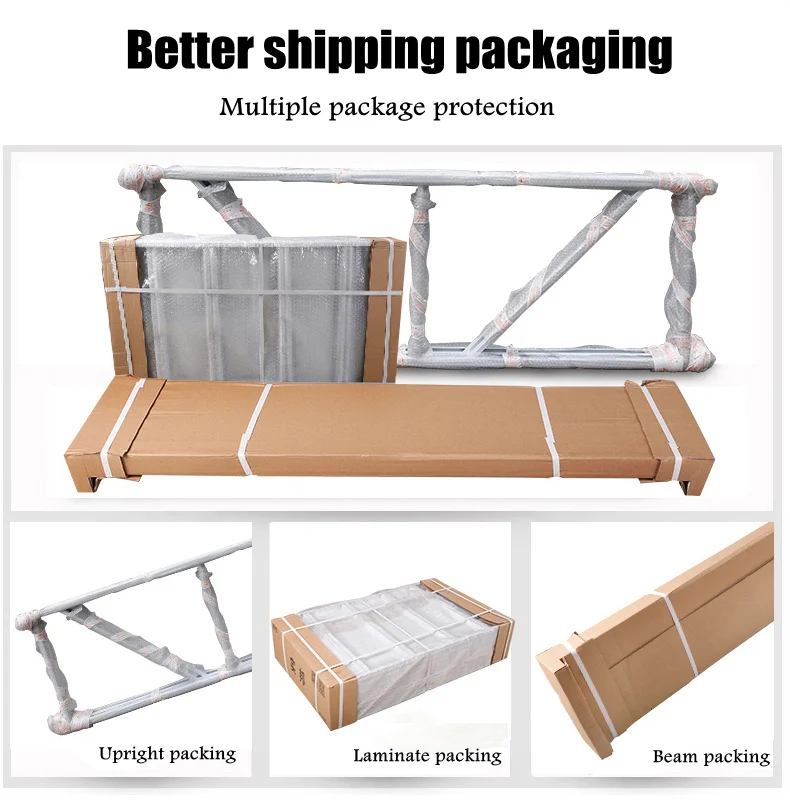
Packaging, Shipping and Services


Certifications


FAQ
As one of the most professional lean tube suppliers in China, we're featured by quality products and low price. Please rest assured to wholesale discount lean tube in stock here from our factory. Contact us for customized service.